Master the Neurological Emergency: Introducing the Neurology Pack for MedDiagnosis
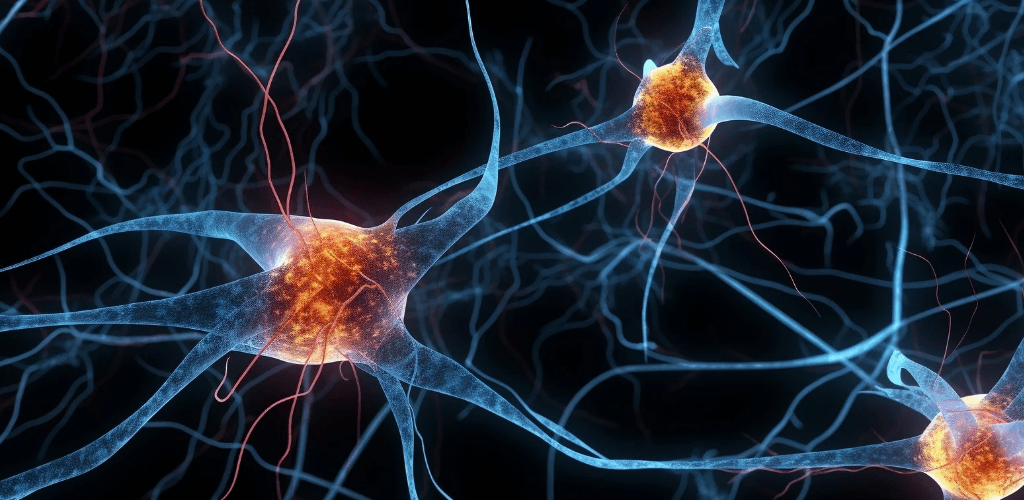
Neurology is the specialty where confidence becomes dangerous.
You have seen the flashcards. You know the classic presentations. Thunderclap headache. Ascending weakness after a GI illness. Pinpoint pupils and respiratory depression. You know what those mean — and that is exactly the problem.
The Neurology Pack is built around a single uncomfortable truth: the nervous system fails silently. By the time the diagnosis is obvious, the window has already closed.
What's in the pack
12 advanced cases, all set in the acute setting. Every case is a neurological emergency disguised as a diagnosis you already know. The presentations are familiar. The reflexes they trigger are real. And in several cases, acting on those reflexes is what causes permanent harm.
This pack runs in full resident mode — you order blind, with the information available at the time, the way you would on a real shift.
The hardest pack in the app
The Neurology Pack is explicitly designed to challenge the pattern-matching habits that question banks build into you. This is not about obscure diagnoses or rare presentations. The conditions in this pack are ones you will have studied. The difficulty is what happens when the right answer looks exactly like something else — and the wrong treatment is the one that felt correct.
Every case has a specific, mechanistically plausible chain of harm that follows from the wrong decision. You will understand not just that you were wrong, but exactly why it mattered.
The neurology mimic problem
Neurology has more clinically dangerous mimic pairs than any other specialty. A stroke mimics a Todd's paralysis. Guillain-Barré mimics myasthenic crisis. A thunderclap headache could be subarachnoid haemorrhage, RCVS, or benign exertional — and the workup and treatment for each are completely different. The clinical reasoning skill that matters here is not pattern recognition — it is pattern differentiation.
Why mimic pairs are so dangerous on exams
On USMLE Step 2 CK and the Neurology shelf, the highest-yield questions are not the ones that test rare diagnoses. They are the ones that present two conditions with near-identical initial presentations and ask you to choose the right investigation or treatment. Give tPA to a stroke mimic and you cause a bleed. Withhold it from a real stroke and you lose the penumbra. The margin for error is measured in minutes, and the cost of the wrong answer is permanent.
This is the gap that traditional study methods struggle to close. You can memorise the differentials for thunderclap headache. But until you have sat with a case where the LP is equivocal, the CT is negative, and the clinical picture is ambiguous, you have not been tested on what actually matters — the decision you make under uncertainty.
Why this matters for your exams
Neurology is one of the most heavily tested areas on USMLE Step 2 CK and the Neurology shelf — not because the diagnoses are obscure, but because the mimic pairs and management decisions are notoriously difficult. MedDiagnosis trains you to sit with uncertainty, order deliberately, and resist the pull of the obvious answer.
Every case ends with detailed feedback on your reasoning — where it held, and where it didn't. For students preparing for NEET PG and NEXT, the long-form neuro vignettes in this pack are closer to the real exam format than any question bank.
Who this pack is for
- USMLE Step 2 CK / Step 3 — neuro mimic pairs and next best step decisions are high-yield
- Neurology shelf exam — covers nearly every high-yield neuro emergency on the shelf
- COMLEX Level 2 / 3 — same clinical reasoning under pressure
- NEET PG / NEXT — long-form neuro vignette mastery
- Neurology boards — acute neuro emergencies are board favourites
- Emergency Medicine boards (ABEM / ConCert) — most of these present to the ED first
- PLAB 2 / UKMLA — management station prep for acute neuro presentations
Explore the other packs
Neurological emergencies cross specialty boundaries. These packs test complementary reasoning skills:
- Emergency Medicine Pack — many neuro emergencies present to the ED first
- Cardiology Pack — stroke and cardiac pathology share risk factors and presentations
- Toxicology Pack — toxidromes frequently present with neurological findings
- Infectious Disease Pack — meningitis, encephalitis, and CNS infections overlap with neuro emergencies
Ready to test your instincts?
Whether you are preparing for boards or heading into your neurology rotation, this pack will show you where your reasoning is solid — and where it has been running on autopilot. Download MedDiagnosis on iOS or Android. Free to start.
Related Posts
![How to Study for Step 2 CK: Complete Guide + Study Schedule [2025]](/_next/image?url=%2Fimages%2F20260312_105723_0000.png&w=3840&q=75)